The Law of Averages and Large Numbers in Sales: What Local Businesses Should Track
Learn how the law of averages and law of large numbers apply to sales, website leads, quote requests, follow-up, and conversion tracking for local service businesses.
Sales can feel random when you only look at a few leads. The law of averages and the law of large numbers help local businesses understand why consistent lead flow, cleaner website conversion, and disciplined follow-up reveal the real pattern.
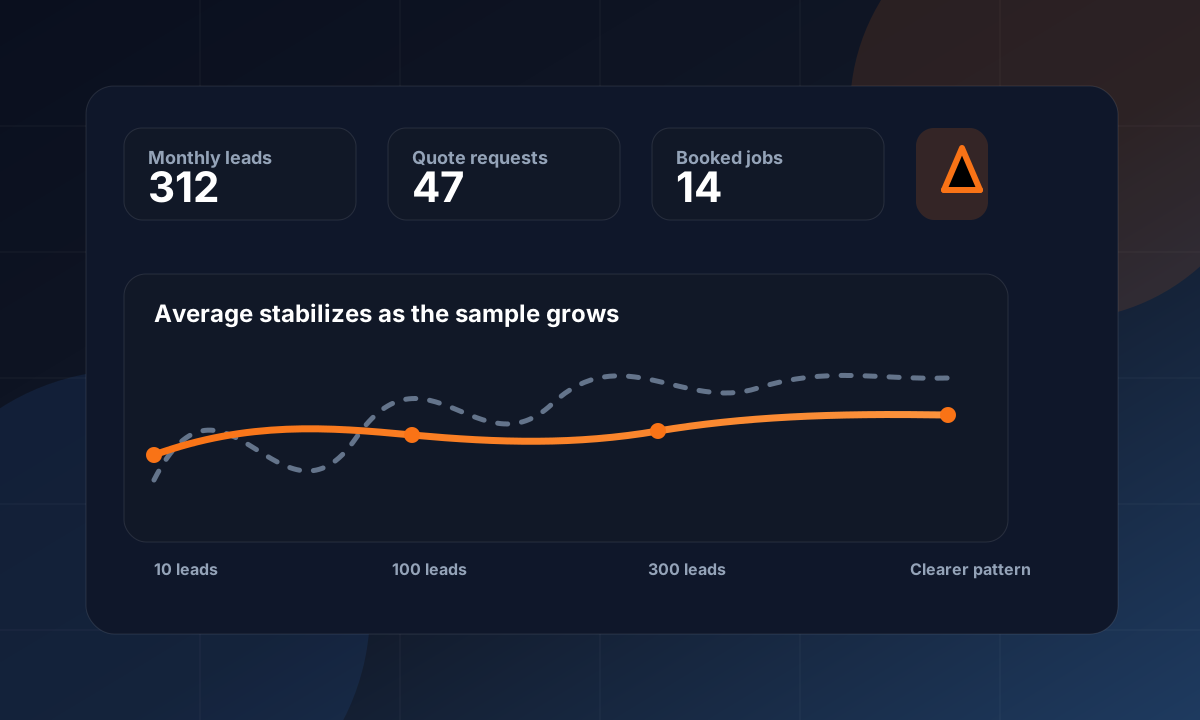
Why sales feels random when the sample is too small
A local business owner can have a great week and a terrible week without changing anything meaningful. Three quote requests come in on Monday, nobody replies on Tuesday, one buyer ghosts the estimate, and one customer books right away. If you judge the whole business from those few events, sales looks like luck.
That is where the law of averages and the law of large numbers become useful. They do not promise that every lead will turn into a sale. They help you understand that individual outcomes are noisy, while repeated outcomes start to reveal the real pattern. In plain English: you need enough attempts before you can trust the average.
For Wade Digital clients, this matters because websites, ads, SEO, outreach, and follow-up all create data. After enough traffic, calls, quote requests, and follow-up attempts, you can see what is working and what is leaking revenue.
The law of averages in sales, without the hype
People often use the law of averages casually: if you make enough attempts, some will work. In sales, that idea is partly helpful and partly dangerous. It is helpful because consistent action matters. A contractor who follows up with 100 qualified leads will usually learn more than one who waits for five perfect inquiries.
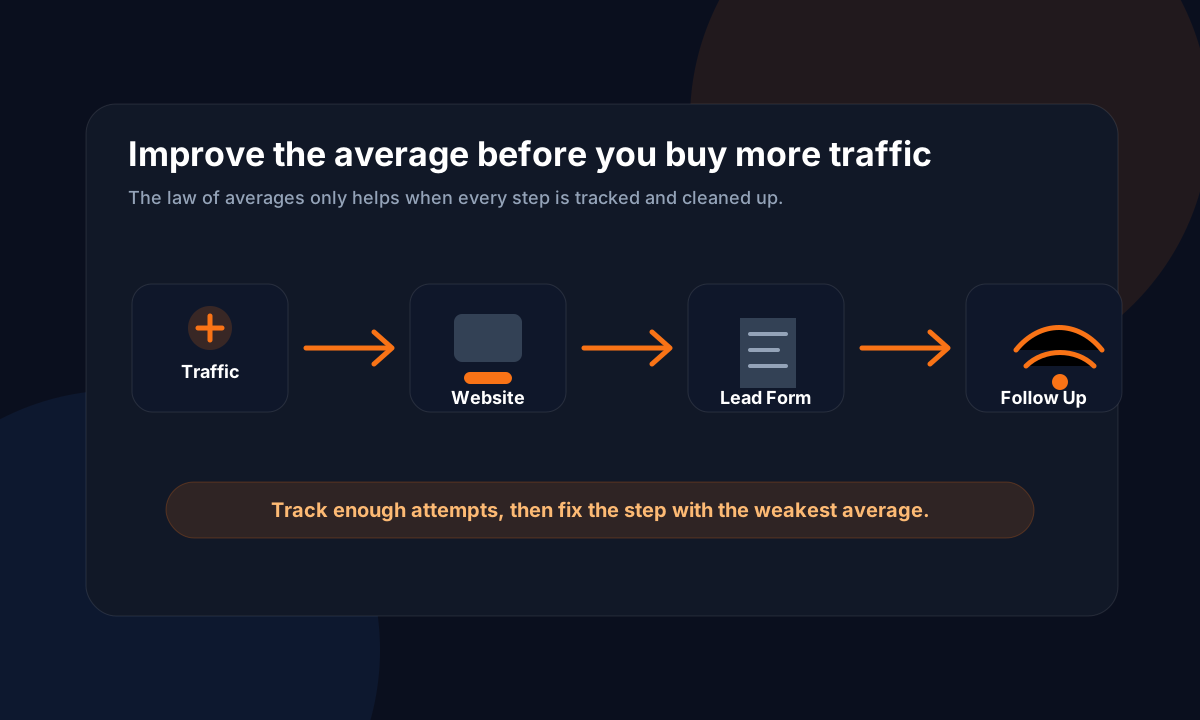
The dangerous part is assuming averages improve by magic. If the website is unclear, the contact form is buried, the offer is weak, or follow-up takes two days, more attempts simply expose the same problem at a larger scale. The average only becomes useful when the inputs are reasonably consistent and the process is tracked.
A better sales version is this: when you repeat a defined process enough times, you can measure its average performance. If 300 visitors produce 18 quote requests, you have a website conversion signal. If 50 quote requests produce 12 booked calls, you have a follow-up signal. The point is measurement, not blind optimism.
The law of large numbers is the part business owners should respect
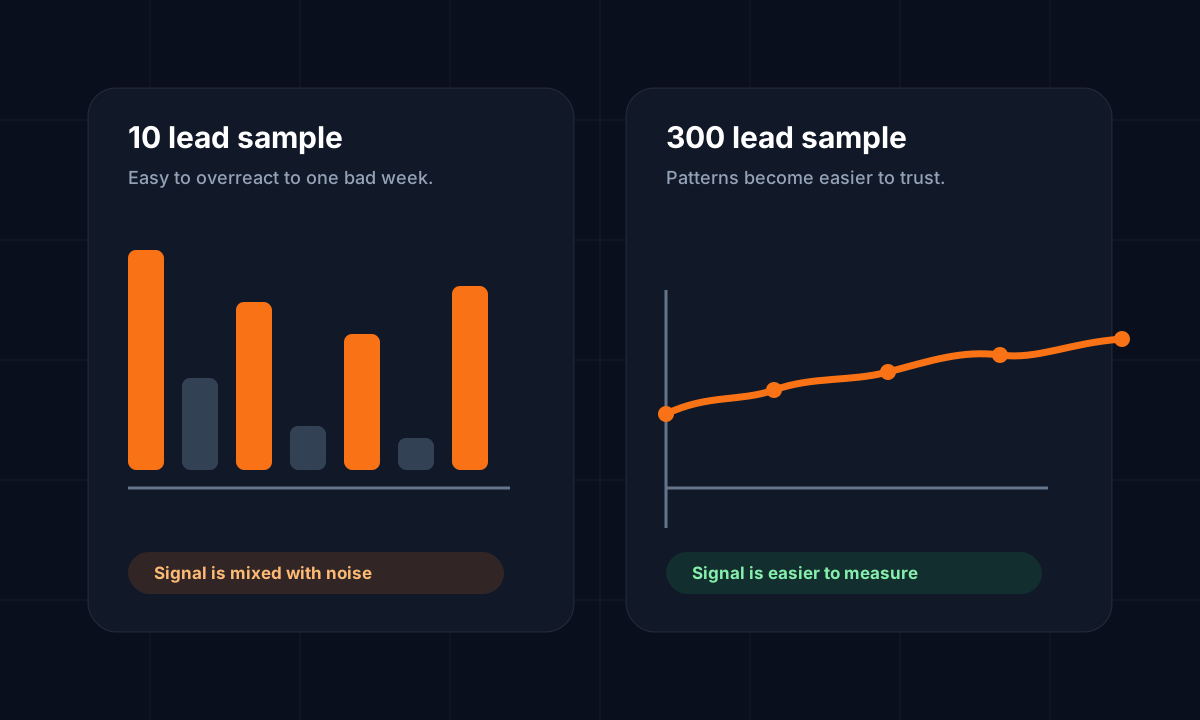
The law of large numbers says that as the number of observations grows, the measured average tends to move closer to the true average. Sales leaders do not need a statistics degree to use that idea. They need patience, clean tracking, and enough volume before making major decisions.
If a new landing page gets 40 visits and no calls, that may be a problem or it may be a tiny sample. If it gets 1,000 qualified visits and no calls, the conclusion is much stronger. The same applies to cold outreach, local SEO, paid ads, referral campaigns, and website forms.
This is why Wade Digital looks for patterns across the whole revenue path. The question is not simply, did the website get a lead today? The better question is, across a meaningful sample, how many people saw the page, understood the offer, trusted the business, took action, and received timely follow-up?
Where local businesses usually misread the numbers
The most common mistake is judging quality from emotion instead of sample size. One bad lead can make an owner say the website leads are junk. One booked job can make an ad campaign look better than it is. Both reactions might be wrong because the sample is too small.
Another mistake is mixing different lead sources together. A referral, an emergency Google search, a cold email reply, a Facebook message, and a website form do not behave the same way. If you combine them without labels, your average becomes cloudy. You may think your website is weak when the real issue is unqualified paid traffic.
- Do not judge a lead source from one week of activity.
- Separate website leads, ad leads, referrals, social messages, and cold outreach replies.
- Track quote requests and booked jobs separately.
- Measure response time before blaming lead quality.
- Look at conversion rates by page, service, and source whenever possible.
The sales averages worth tracking first
A useful sales dashboard does not need to be complicated. Start with the averages that explain the path from attention to booked work. For most local service businesses, that means visitors, calls, forms, qualified inquiries, estimates, follow-ups, booked jobs, and revenue from booked jobs.
The website matters because it sits near the front of that path. If 1,000 people visit a service page and only two contact the business, the page may have a clarity problem, trust problem, offer problem, mobile problem, or traffic mismatch. If 80 people contact the business and only two book, the website may be doing its job while follow-up or sales process needs work.
This is why a free revenue review or website lead audit should look beyond design. Pretty pages are not the goal. Better visitor understanding, easier action, and more qualified sales conversations are the goal.
| Metric | What it shows | What to improve |
|---|---|---|
| Visitors to service page | Whether enough people see the offer | SEO, ads, local pages, internal links |
| Visitor-to-lead rate | Whether the page turns attention into action | Headline, proof, CTA, speed, mobile layout |
| Lead-to-call rate | Whether inquiries become conversations | Response time, phone visibility, booking flow |
| Quote-to-close rate | Whether estimates turn into work | Sales process, follow-up, offer clarity |
Why better averages start with better inputs
The law of large numbers will not rescue bad inputs. If a business sends unqualified traffic to a confusing page, the larger sample will simply prove that the funnel is weak. If the offer is unclear, the form is too long, or the phone number is hard to tap on mobile, the average will reflect those problems.
That is good news, because many inputs can be improved. A stronger service page can name the exact buyer problem. Better proof can reduce doubt. A shorter form can increase completion. Faster follow-up can turn more requests into real conversations.
How this applies to cold outreach and local SEO
Cold outreach and local SEO both require enough volume to judge fairly, but they create different kinds of averages. Cold outreach might track messages sent, replies, positive replies, booked calls, and closed deals. Local SEO might track impressions, clicks, service-page visits, calls, forms, and booked jobs.
In both cases, the law of large numbers helps you avoid overreacting. Ten cold emails with no reply do not prove the offer is dead. Ten Google visits with no form submission do not prove SEO is useless. But 2,000 emails with weak replies or 2,000 qualified page visits with weak action create a stronger signal.
The website is where averages often leak
Many businesses think they have a traffic problem when they actually have a conversion problem. They buy more clicks, post more content, or send more outreach, but the website still fails to explain the offer, show trust, or make contact easy. More volume then creates more wasted opportunity.
A good service page helps the law of averages work in your favor. It makes the promise specific, shows who the business helps, answers common objections, gives proof, and makes the next step obvious. It also works on mobile, because many local buyers are searching between errands, from a job site, or after something breaks.
If your sales activity is increasing but calls and quote requests are not, review the page people land on. Wade Digital focuses on these leaks through website lead generation services, website audit services, and contractor-focused pages like website design for contractors.
A simple 30-day tracking plan
For the next 30 days, track the same numbers every week. Do not make the spreadsheet complicated. Record traffic by source, form submissions, phone calls, qualified leads, estimates sent, follow-ups completed, booked jobs, and revenue from those jobs. If possible, tag the page or campaign that created each inquiry.
At the end of each week, avoid dramatic conclusions. Ask what changed, what stayed consistent, and whether the sample is big enough to trust. At the end of the month, compare the main conversion rates. A weak rate does not mean failure. It means you found the next place to improve.
The real lesson: consistency plus inspection
The law of averages is not a permission slip to grind blindly. The law of large numbers is not an excuse to ignore quality. Together, they teach a better lesson: repeat a clear process enough times, measure the results honestly, and improve the weakest step.
For local businesses, sales is not only about more leads. It is about better lead sources, better website pages, better contact paths, better follow-up, and cleaner measurement.
If your website gets visitors but not enough calls, bookings, quote requests, or sales, start by finding the leaks. The numbers may already be telling you what to fix first. You just need enough of them, organized clearly, to see the pattern.
Get 25 Sample Contractor Leads CSV
Download a sample list including verified emails, phone numbers, and website gaps. Zero cost.
Website Checklist
Frequently Asked Questions
What is the law of averages in sales?
In sales, the law of averages is the practical idea that repeated attempts reveal an average outcome over time. It helps with lead conversion, follow-up, and close-rate tracking when the process is consistent.
How does the law of large numbers apply to lead generation?
The law of large numbers means larger samples usually give a more reliable average. For lead generation, that means 500 qualified visits or 300 outreach attempts tell you more than five calls or ten emails.
How many leads do I need before judging a campaign?
There is no universal number, but small samples are risky. Look for enough leads or visits that one unusual customer does not swing the whole result. For many local businesses, monthly patterns are more useful than daily reactions.
Can better website design improve sales averages?
Yes, if the current page is creating friction. Clearer messaging, stronger proof, faster mobile pages, better CTAs, and simpler forms can improve visitor-to-lead rates, though results are never guaranteed.
Download 25 Free Contractor Leads CSV
Includes business name, verified phone number, Google maps rating, and website missing status. Start cold emailing or cold calling immediately.
Related Resources
Calgary Roofing Leads: How to Find Calgary Roofers Without Websites
Build a research list of roofing contractors in Calgary, Alberta who appear to lack custom websites. Review public listing details for local agency outreach.
Edmonton Plumber Leads: Prospecting Local Plumbing Crews Without Websites
Learn how to find plumbing contractors in Edmonton, Alberta who operate without custom websites. Build B2B prospecting lists from public business details.
Vancouver HVAC Leads: Generate HVAC Contractor Leads in BC
Generate lists of heating, ventilation, and air conditioning contractors in Vancouver, British Columbia without websites. Perfect for local agency outreach.